Online Gallery
Lynne LeegteLeegtes photographs reveal form, atmosphere, and intent with crisp precision. She uses soft angled illumination that draws out every detail and echoes the quiet intensity of seventeenth century still life painting. The shell compositions are a direct reference to the paintings by Adriaen Coorte.
Each piece is tuned to its surroundings, creating a direct dialogue with the space. The photographs of her alabaster sculptures result in poised still lifes that invite new layers of depth and meaning.
Still life with shells (2024)
Composition 7
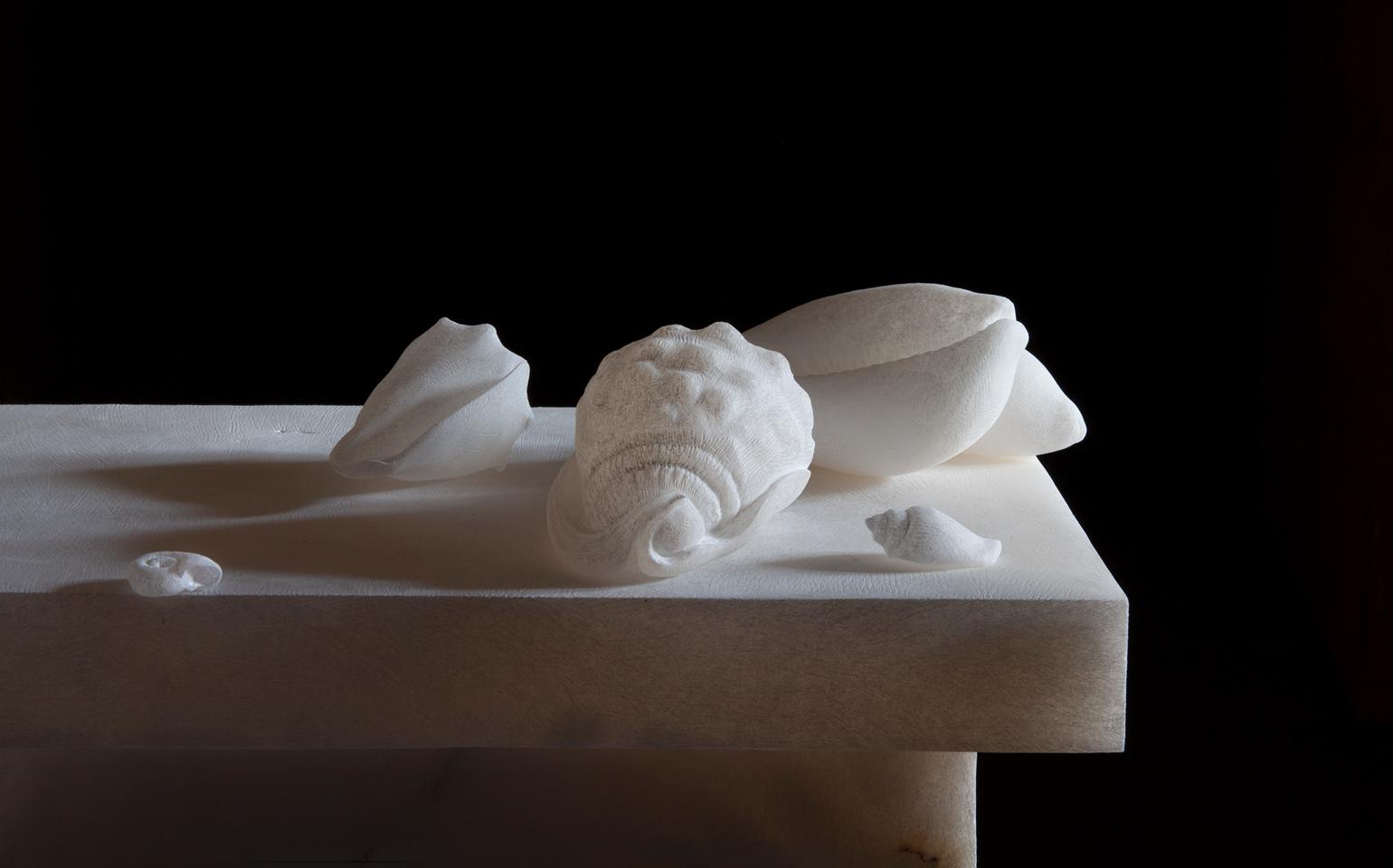
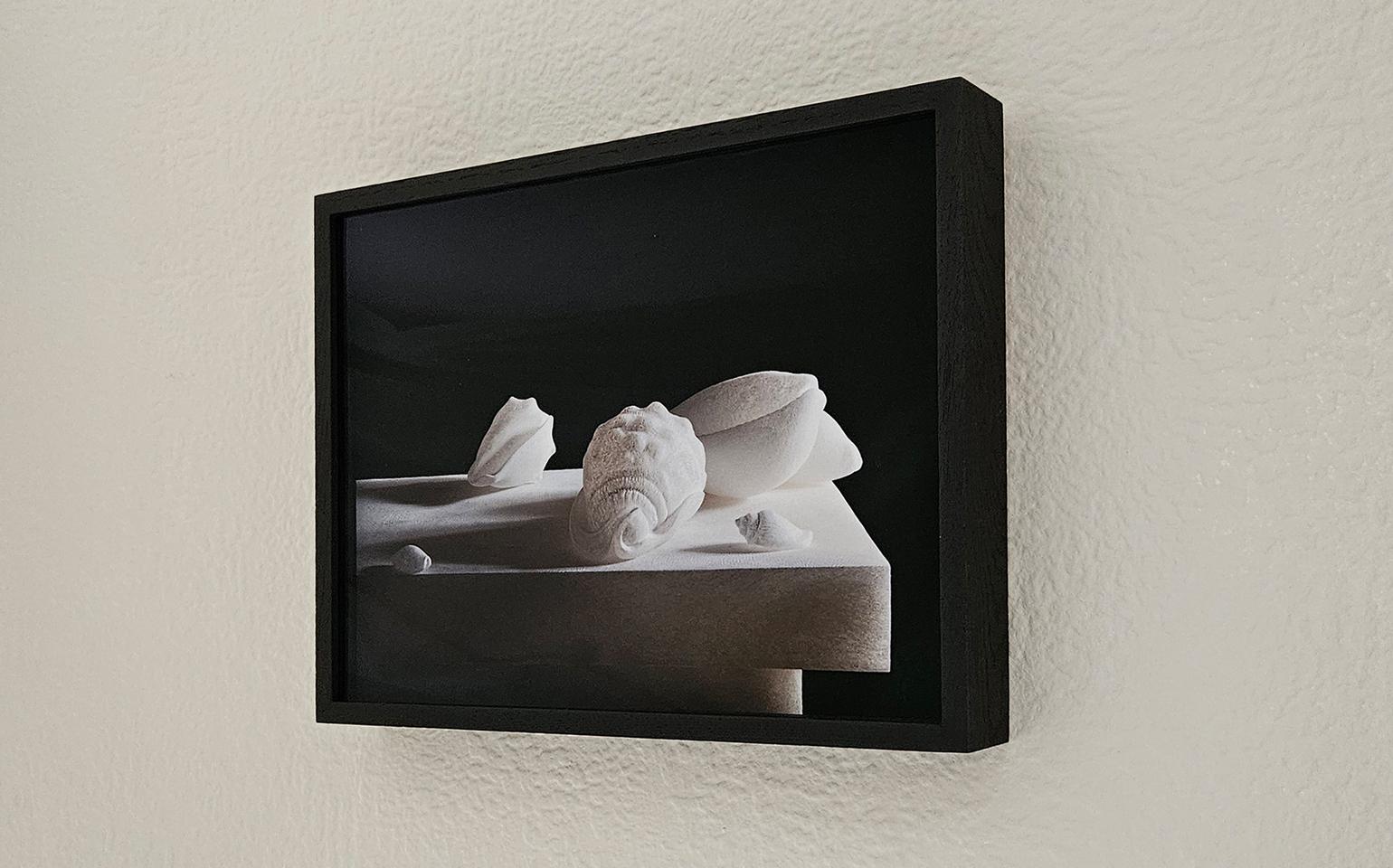
- Size: 24x31,5 cm (ex. frame)
- Material: Glicée print on Hahnemühle paper (White Velvet 270 grs)
- Production: 4 to 6 weeks
- Edition of 8
- Price: € 1150,-
Has this artwork sparked your interest? Please fill in the form below – you will be contacted as soon as possible.
History (2016)
The Library
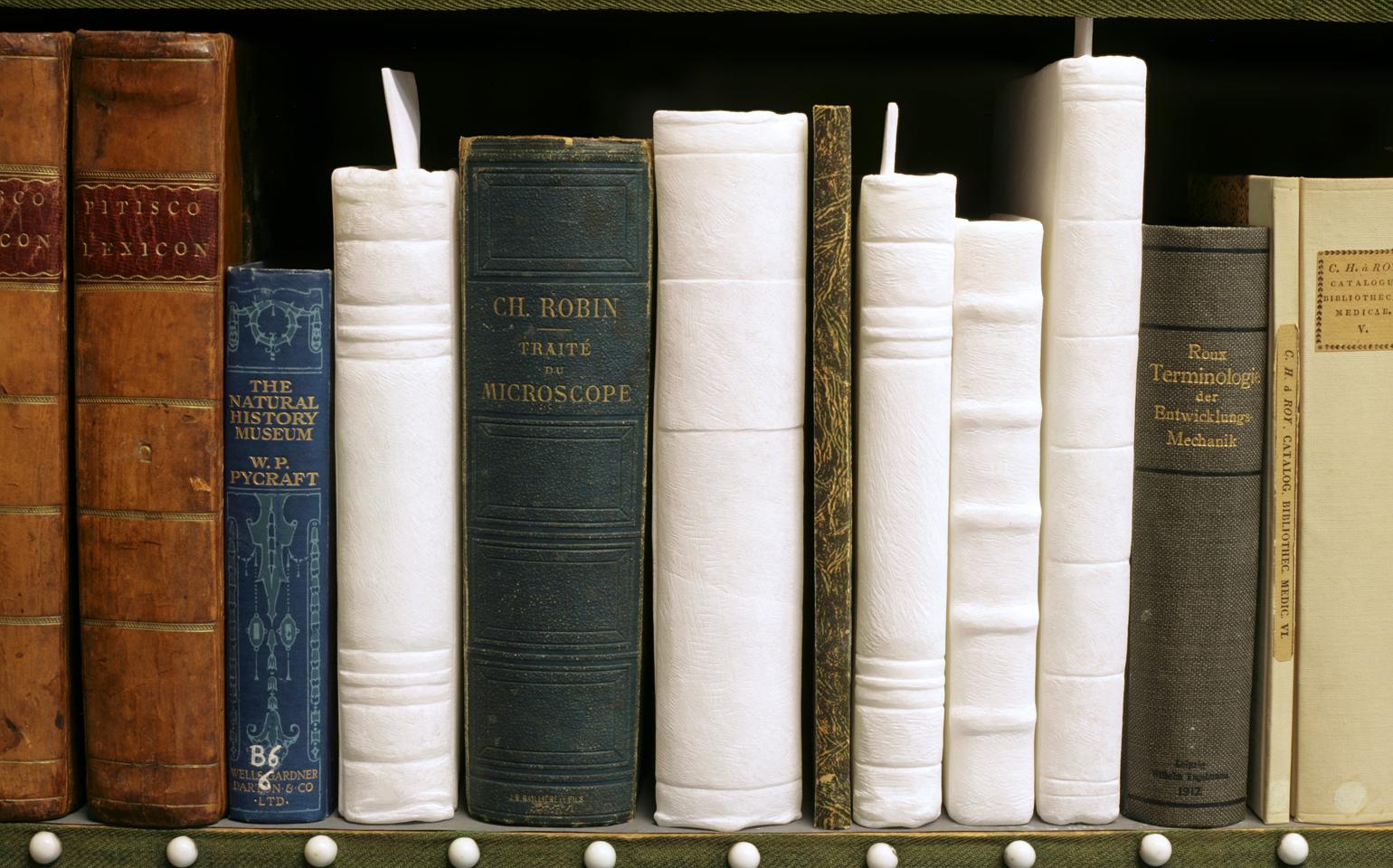
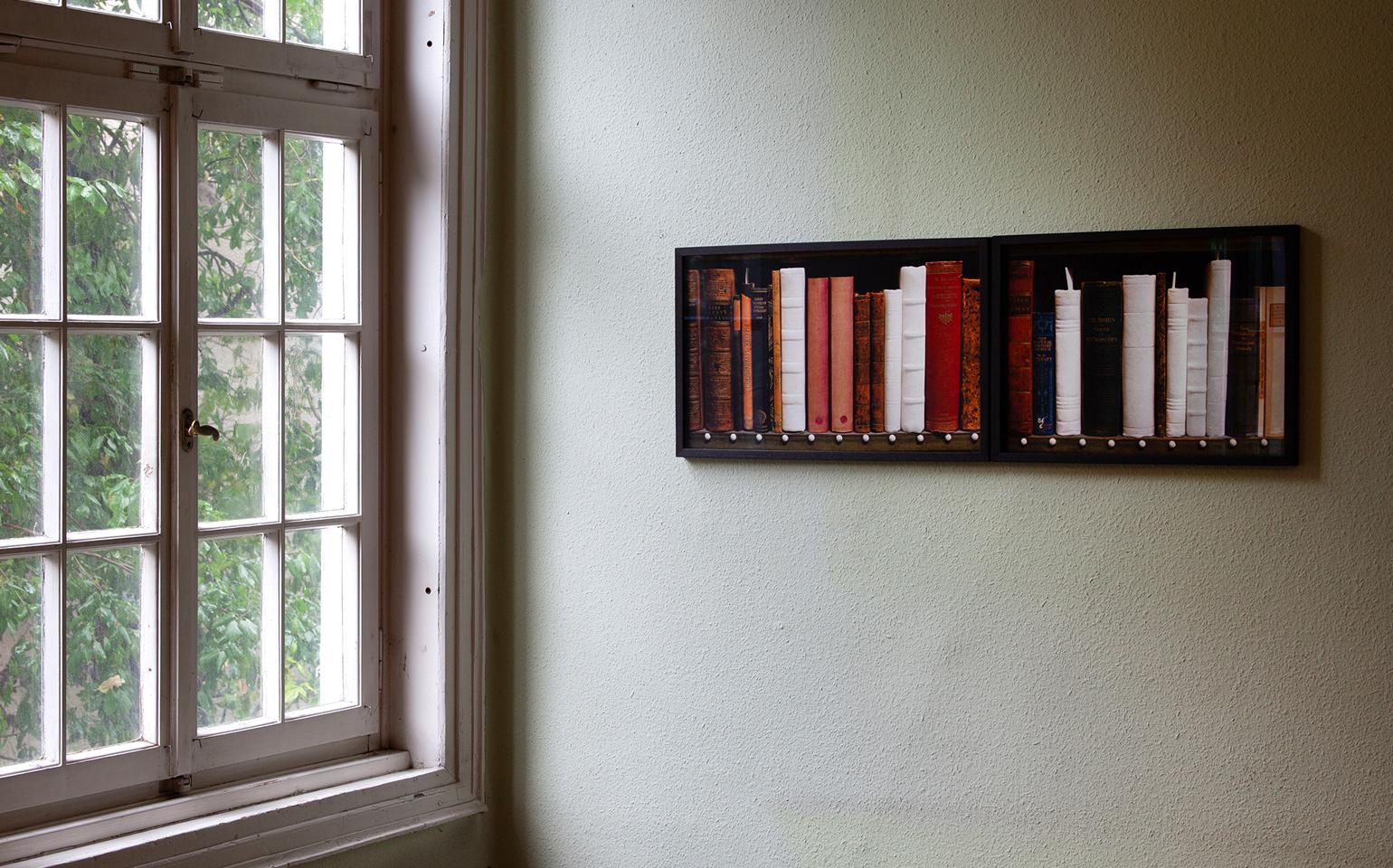
- Size: 27x39 cm (ex. frame)
- Material: Glicée print on Hahnemühle paper (White Velvet 270 grs)
- Production: 4 to 6 weeks
- Edition of 6
- Price: € 1200,-
Has this artwork sparked your interest? Please fill in the form below – you will be contacted as soon as possible.
Theories (2016)
The Library
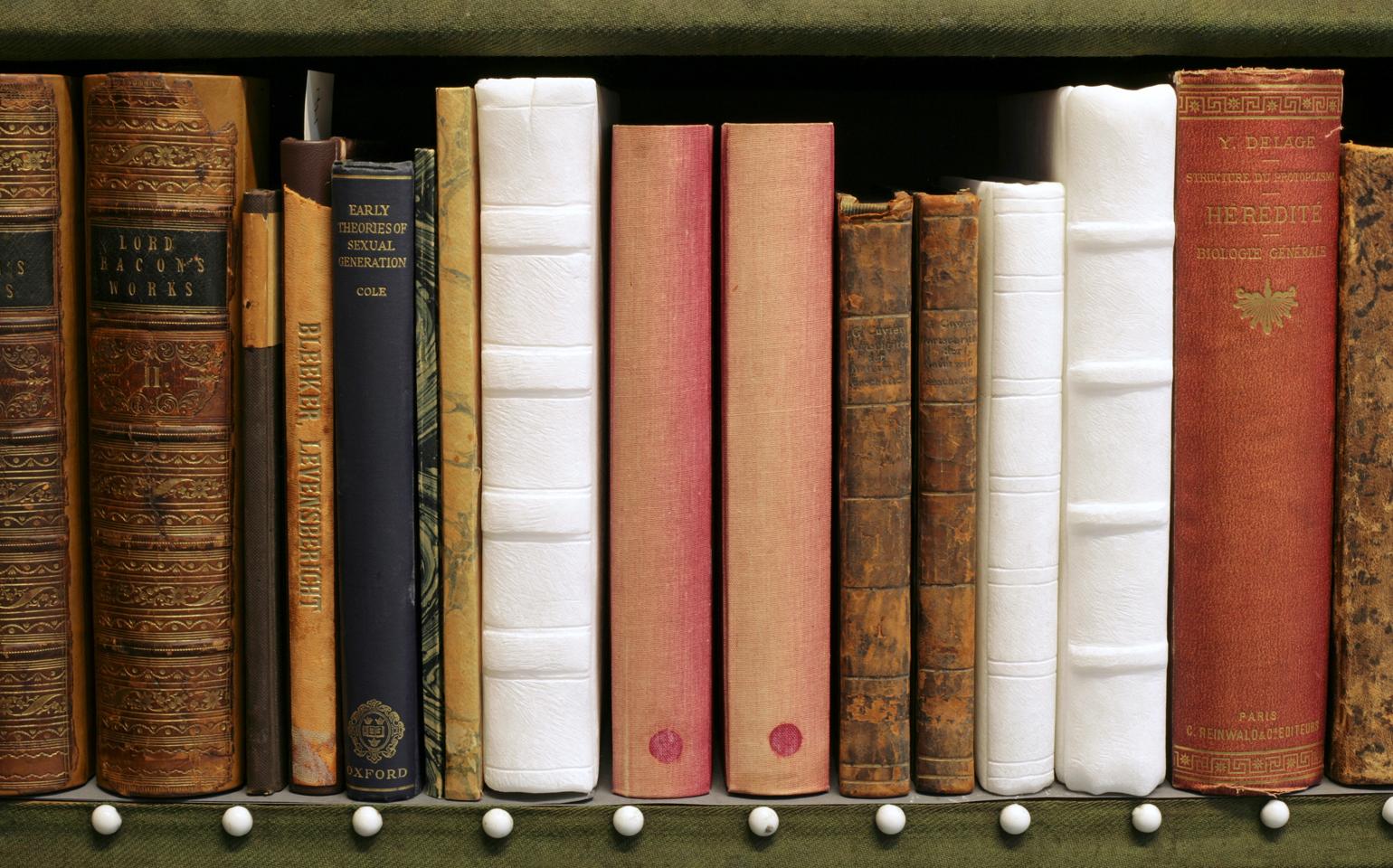
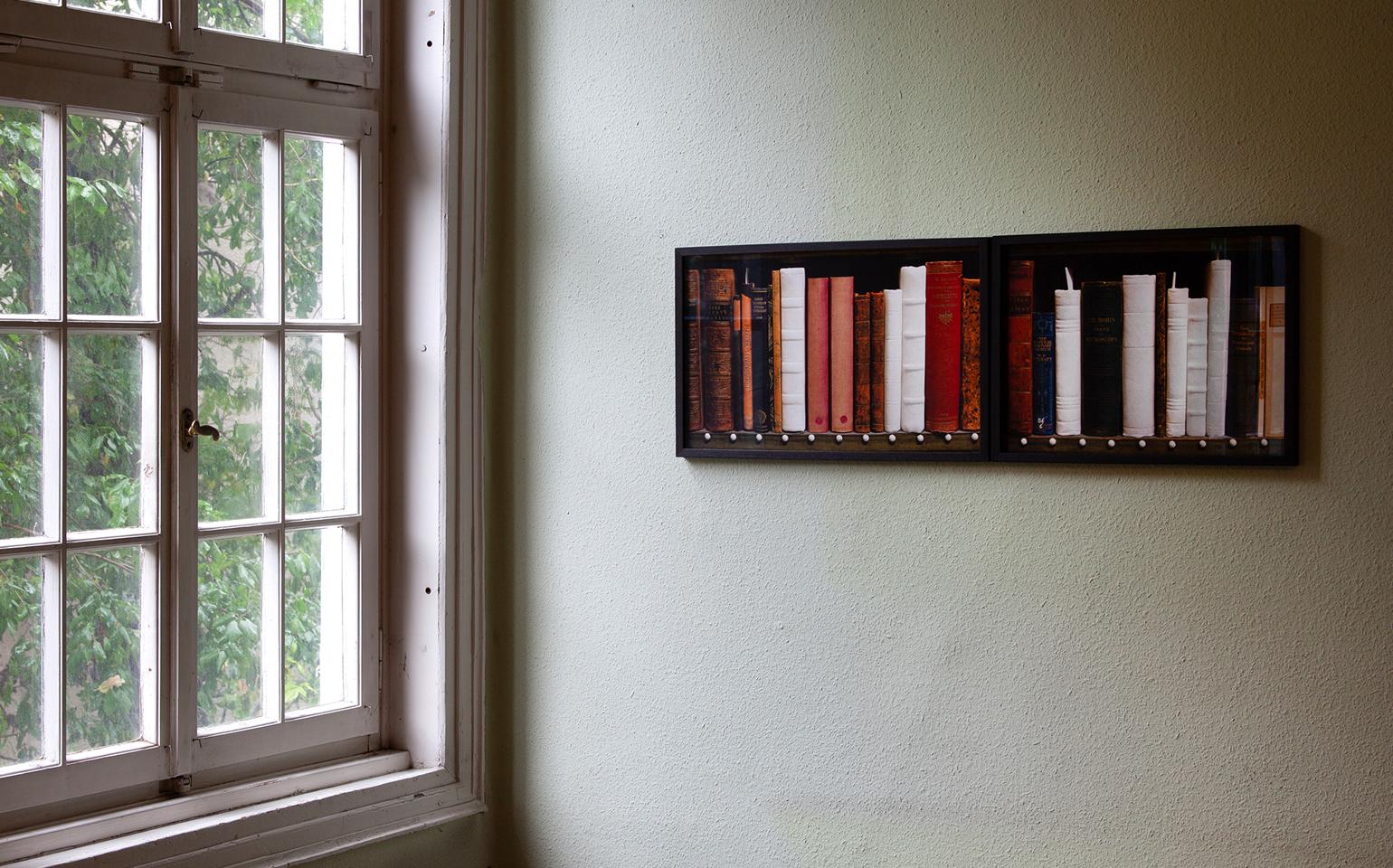
- Size: 27x44 cm (ex. frame)
- Material: Glicée print on Hahnemühle paper (White Velvet 270 grs)
- Production: 4 to 6 weeks
- Edition of 6
- Price: € 1200,-
Has this artwork sparked your interest? Please fill in the form below – you will be contacted as soon as possible.
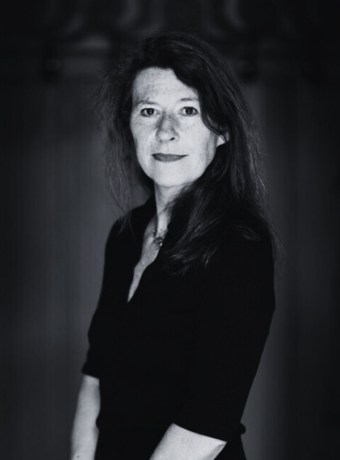
Lynne Leegte
Lynne Leegte (b. 1965, Luton, UK) is a visual artist working across sculpture, installation, and photography. Her work is marked by tranquility and melancholy, evoking themes of transience and reflection. Using materials such as alabaster, textile, and paper, she explores fragility and ephemeral beauty. Leegte considers herself a sculptor in the broadest sense, creating both intimate, hand-carved objects and large-scale, site-specific installations.
Her sculptures often feature alabaster, a translucent stone that captures light and reinforces the delicate atmosphere of her work. This sensitivity to light and texture extends into her mostly staged photography, which is reminiscent of Dutch Golden Age landscapes.
Leegte lives and works in Oostzaan, the Netherlands. Her work has been exhibited in various national and international museums and locations. Including: Museum MORE, Rijksmuseum Twenthe, Museum ‘t Valkhof, Leiden University Medical Center, Allard Pierson Artis Library Amsterdam and CODA Museum, Palazzo Ducale in Genoa (IT) and Abbaye Saint André in Meymac, (FR). Her installation Fenster was acquired by the city of Lippstadt (DE). She has also participated in major art fairs such as PAN Amsterdam, Art Rotterdam and Unseen.
Collections include: Museum MORE, AkzoNobel Art Foundation, Ministry of Foreign Affairs, Lichtpromenade Lippstadt (DE), LUMC Leiden, Light Art Collection Amsterdam, Boekentoren – University of Ghent (BE), Museum ’t Valkhof Nijmegen, Mennonite Singelchurch Amsterdam and Centraal Beheer Apeldoorn. Most recently, she completed The Residents, a permanent sculpture for the new Amsterdam University Library. Fifty-seven books carved in alabaster are set into the wall of the main staircase - a quiet gesture referring to place, history, and memory.